
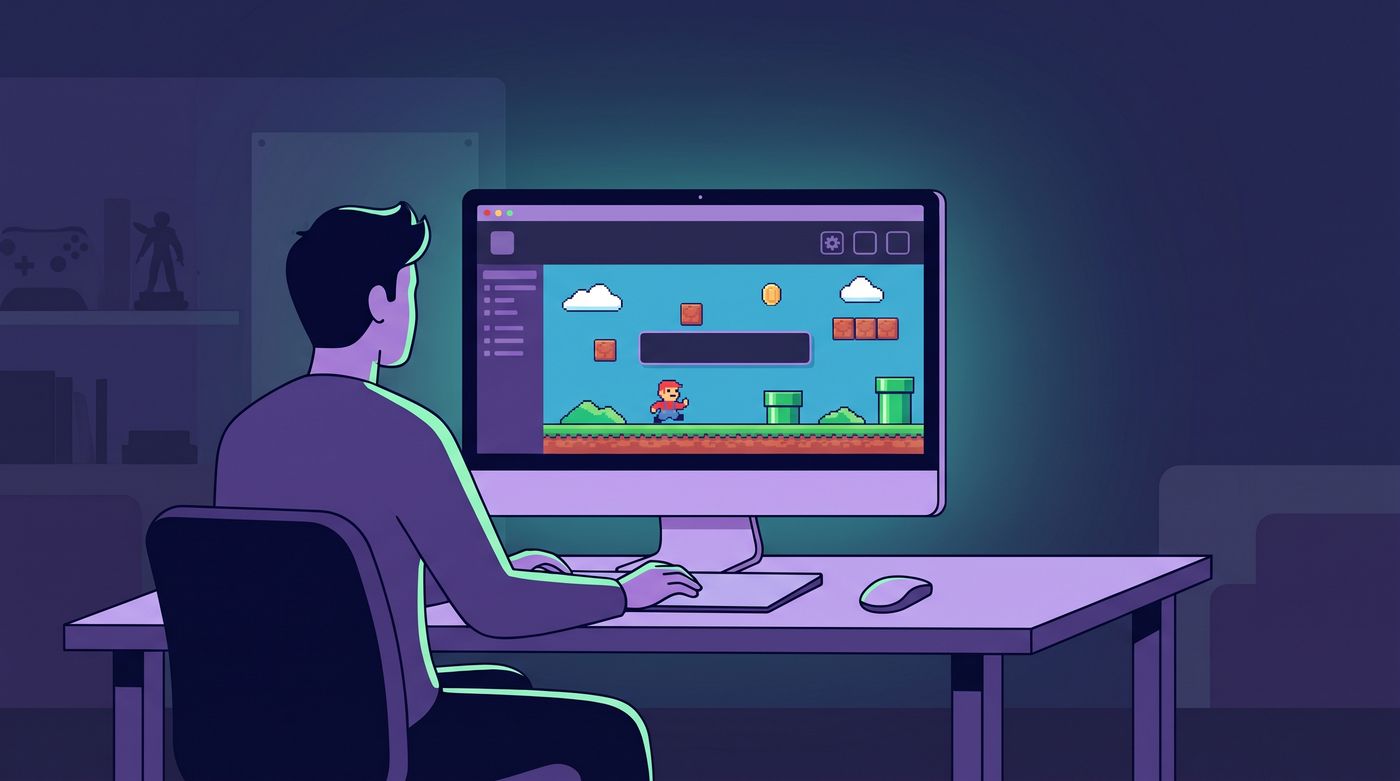
Who Owns the Rights to Games Created with Google Playground?
Google does not claim intellectual property rights over games created in Playground; however, this does not mean that your game is automatically protected by copyright in your favor. Under both Turkish law and US law, protection depends on human creative contribution. Elements generated solely through text prompts are likely to remain unprotected content over which no one holds exclusive rights. What belongs to you is the portion you have shaped through your own creative choices and can document. This article examines Playground’s terms of use and how games generated with artificial intelligence are assessed from an intellectual property perspective under US and Turkish law.
1. Jurisdiction
The reason for addressing the two jurisdictions together is practical. Playground is currently available only in the US and only to users over the age of 18 the platform’s contractual terms and the initial debates are grounded in US law. On the other hand, for a studio or investor established in Türkiye, the question of whether rights arise is answered under the law of the country for which protection is sought, that is, in Türkiye, under the FSEK.
The EU, the United Kingdom and other countries fall outside the scope of this article. In particular, the United Kingdom’s specific rule on computer-generated works may lead to a different outcome.
2. Google Playground’s Rules on Intellectual Property
A) Launch of Playground and the Unity Partnership
On October 7, 2026, Google made Playground, its experimental platform that generates playable browser games from text prompts, available to users over the age of 18 in the US (Google announcement). On the same day, a strategic partnership with Unity was announced; Unity Spark, the first product of this partnership, is planned to be offered as a closed beta within Playground at the end of 2026.
B) Playground Additional Terms of Service
The Playground Additional Terms of Service apply together with the Google Terms of Service and prevail in the event of a conflict. The provisions most relevant to the allocation of rights are as follows:
• Ownership: Google does not claim ownership of the user’s games; however, it reserves all rights in the Google features, services and assets used in creating the games.
• License: The use of content is governed by the Permission to use your content section of the Google Terms of Service that is, Google is granted a broad license to operate the service.
• Monetization: The user grants Playground the right to monetize their games, including through advertising Google states that it will obtain the user’s consent before doing so.
• Third-party intellectual property: Prompting for, generating, or incorporating into a game any third-party intellectual property, such as copyrighted characters from other games, without the written permission of the rights holder or another legal basis, is prohibited.
• AI markers: Removing, obscuring or altering watermarks, labels and metadata indicating that the content has been generated by artificial intelligence is prohibited.
• Liability: The user is legally responsible for their games; if the necessary rights terminate, the game must be deleted.
C) Platform Rules: Community Guidelines
The Playground Community Guidelines expressly permit parody, satire, homage, established game mechanics, and broad genres such as kart racing, dungeon crawlers and retro platformers. The condition is that the game is clearly identifiable as an independent production and does not create confusion as to official endorsement or authorization.
By contrast, titles and descriptions that deceptively imitate existing games, applications or studios are prohibited. Designs that resemble the signature cover art, icons or packaging of well-known commercial games to an extent likely to cause confusion as to the source of the game are also prohibited. Fake Official Release labels and unauthorized Editor’s Choice badges are likewise expressly listed.
3. AI-Generated Games under US Law
In its report Copyright and Artificial Intelligence, Part 2: Copyrightability, published on January 29, 2025, the US Copyright Office reached the following conclusions:
• Material generated entirely by artificial intelligence, or material over whose expressive elements there is insufficient human control, is not protected.
• Given current technology, prompts alone do not provide the user with sufficient control to render them the author of the output; prompts function as instructions conveying unprotectable ideas.
• Where a human provides their own work as input and that work is perceptible in the output, that person is the author of at least that portion. The assessment is made on a case-by-case basis.
4. AI-Generated Games under Turkish Law
Article 1/B(a) of the FSEK defines a work as any intellectual or artistic product that bears the characteristics of its author and falls within one of the categories enumerated in the Law. Article 8 designates as author the person who created the work. Within the framework of these provisions, it is debatable whether outputs generated solely through text prompts and lacking sufficient human creative contribution may qualify as works. By contrast, a person’s creative contributions to a game’s visual design, story, code or the original arrangement of its elements may be protected under the FSEK, provided that they satisfy the requisite conditions.
5. Legal Assessment and Practical Implications
Google’s Disclaimer of Ownership Does Not Mean That the Copyright Belongs to You
The Playground terms govern the rights and obligations between Google and the user; however, they do not, in and of themselves, create a copyright enforceable against third parties. Whether copyright arises depends not on contractual provisions but on the copyright rules of the relevant country.
Accordingly, if a character image or a piece of code generated solely by prompt is not protected, an infringement action under the FSEK may prove insufficient to secure protection where a rival studio copies it. Moreover, the use and monetization rights granted to Google may, irrespective of the existence of copyright, contractually limit the user’s economic control over the game.
What Is Protected and What Is Not?
A game is not a single work but a whole composed of layers. The legal fate of each layer must be assessed separately. Game mechanics and genre fall within the domain of ideas, which are not protected under the FSEK; reflecting this, the Playground rules leave genres open. The principal basis for protection lies in human creative choices over expression: examples include a character you have drawn yourself, music you have composed, a story you have written, and the creative selection and arrangement thereof.
Where copyright protection is weak, other instruments come into play. The game’s title and logo may be registered as trademarks under Industrial Property Law No. 6769. Source code and design documents may be protected as trade secrets. In addition, the unfair competition provisions of the Turkish Commercial Code (Article 54 et seq.) may apply against copying and conduct likely to cause confusion.
From the Investor’s Perspective
The investment value of a game company depends not only on the commercial potential of the games it develops but also on the intellectual property rights and usage rights it holds over those games. As artificial intelligence enters production, legal due diligence focuses on the following three questions:
1. Which parts of the game are genuinely owned by, and exclusive to, the company?
2. Where do the rights in the content used originate, and what do the platform terms and third-party licenses permit?
3. Can human creative contribution be demonstrated through records?
In conclusion, although Playground accelerates the game development process, it does not eliminate intellectual property issues. On the contrary, it necessitates answering the question “Who owns the rights to this game?” while still at the development stage. In a market where artificial intelligence makes game production cheaper, the competitive advantage will lie with studios that possess original intellectual property assets, strong player communities and technologies that are difficult to replicate.
Sources
• Google — Introducing Playground (October 7, 2026)
• Playground Additional Terms of Service (last modified September 20, 2026)
• Playground Community Guidelines
• Google Terms of Service
• US Copyright Office — Copyright and AI, Part 2: Copyrightability (January 29, 2025)
• Law No. 5846 on Intellectual and Artistic Works